
Okay, so check this out—I’ve bounced between a handful of Solana explorers over the years. Whoa! My first impression was that all explorers were basically the same. But that was wrong. Actually, wait—let me rephrase that: they overlap a lot, but each surfaces different kinds of truth about the chain. Something felt off about some UIs. My instinct said use the one that gives raw facts fast and then the context around them. I’m biased, but Solscan became my go-to because it balances speed, depth, and readability in a way that fits real workflows.
Quick gut reaction: Solscan gets you from question to evidence. Seriously? Yep. You paste a tx signature and you can tell in seconds whether funds moved, which program was invoked, and where the tokens landed. On the other hand, there are places where deeper digging is necessary, though actually Solscan often points you the right way—into logs, into inner instructions, or into the program source if available. Initially I thought you only needed signature, status, and amount. Then I realized you really need the call graph, the account changes, and the memos sometimes. That made the difference between a surface-level “ok it succeeded” and a thorough audit of what actually happened.
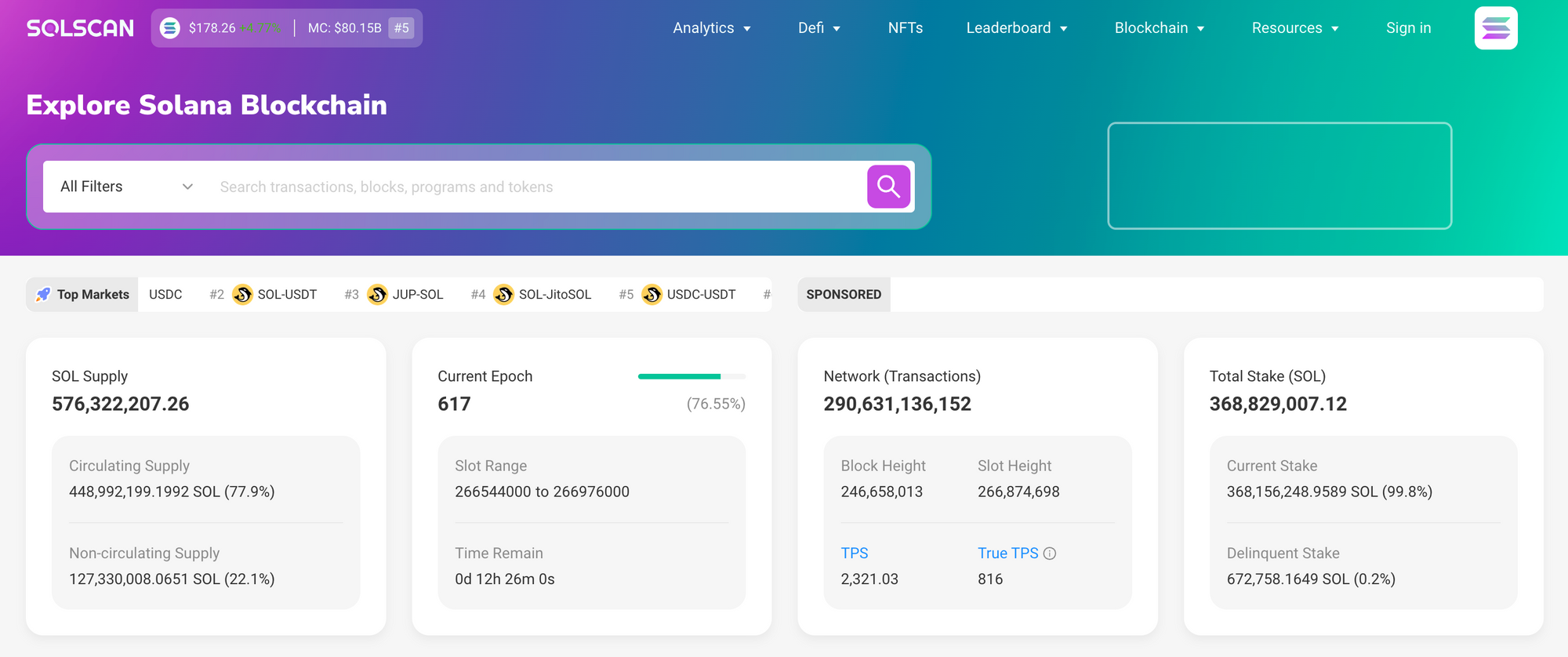
How Solscan surfaces SOL transactions and what to look for
When you’re staring at a transaction page you should scan three things first: the signature and finality status, the list of invoked programs (that tells you what kind of operation it was), and the post-transaction account balances. Really simple filter. My workflow is short: copy-paste signature, check status, open instructions. Then I read logs. The logs are the honest, often messy truth—rarely sugarcoated. If you want to dive deeper, head to the “inner instructions” section where cross-program calls are shown. It helps when a swap invokes Serum or a wrapped SOL transfer invokes a token program; those nested calls explain the money flow.
Here’s what trips people up. SOL amounts are denominated in lamports on-chain. One SOL equals 1,000,000,000 lamports. Hmm… that took me a beat to internalize. Fees look tiny until you realize lamports scale. And transaction finality in Solana has nuances: “confirmed” is different from “finalized.” If you’re watching a big swap or airdrop, wait for finalized—unless you’re extremely time-sensitive and willing to accept reorg risk (which is rare but possible during network congestion). Also, watch for duplicate signatures or retries; sometimes a wallet will re-submit and create two related attempts… which is messy, very very messy.
Solscan gives a solid visualization of token transfers. It shows transfers to native SOL, SPL tokens, and even NFTs where applicable. The token transfer list is often the clearest place to see where funds landed. If something looks missing, check the account changes tab—some balances are updated only after inner instructions run, so a naïve token-transfer list may omit an intermediate step. Oh, and memos—never underestimate the memo field. People put order IDs, KYC tags, or notes in memos. It saved me more than once when tracing funds for a support ticket.
Tools and panels I use most
Honestly—sometimes the little things matter more than the flashy charts. The “Program Logs” pane is my favorite. It uncovers program-specific events that you’d otherwise miss. Then there’s the “Accounts” table which shows pre- and post- balances; that one tells you the net movement at a glance. The “Token Info” page gives metadata and holders for an SPL token, which is invaluable when vetting a project. Lastly, the block explorer’s RPC endpoint display is helpful if you’re debugging a node or comparing return values from different RPCs.
One practical tip: when you’re investigating complex flows (DEX routing, cross-program swaps, stake activations), copy the entire transaction signature into Solscan and then open the logs in a separate tab while you step through instructions. My brain likes to map calls visually, so I’ll redraw the call graph on paper sometimes—old habit. On a technical level, look for program IDs you recognize: system program, token program, associated token program, memo program, stake program, and any custom program IDs. If you see a program you don’t know, google the ID? Wait—actually, try searching the program ID in Solscan first because it often links to verified source or the project page.
Privacy note: explorers are public by definition. If you’re trying to be pseudonymous, remember transactions, accounts, and token flows are all visible forever. You can create ephemeral addresses, but patterns leak. That part bugs me about the whole space—transactions are transparent and sometimes that transparency is too much. (oh, and by the way…) If you need to correlate wallets, chain analysis is pretty accessible—Solscan makes that easier, for better or worse.
Reliability, data limits, and why cross-checking matters
Solscan is fast. But nothing is perfect. During heavy network load some explorers lag or report different confirmation levels momentarily. My instinct said trust the chain, then verify across sources. Initially I thought a single explorer was sufficient. Then I had a case where Solscan showed a tx as confirmed while another tool flagged it pending. I dug into RPC responses myself and saw the propagation timing difference. On one hand, explorer UX adds value; on the other, raw RPC is the source of truth and sometimes shows earlier or later state depending on the node.
If you’re doing high-stakes work, cross-check signatures against multiple RPCs, and if possible, fetch the confirmed block directly from a validator you trust. Also, watch for rate limits—if you’re scraping or automating, respect the APIs. Automating too aggressively will get you blocked (yes, been there). For forensic work, export CSVs or JSON from Solscan where available, and keep local records. It saved me during a dispute about token distributions once.
When Solscan doesn’t give the full story
There are times when an explorer can’t decode custom program events or proprietary logs. That’s fine. In those cases you’ll need program source or at least program docs. Some projects verify source on-chain; others don’t. If a program isn’t verified, you can still read raw logs and account diffs, but interpretation becomes guesswork. I’m not 100% sure about everything, and that’s ok—sometimes you need to contact a dev or the project’s support. Other times you can infer intent from patterns in account changes. Pattern matching isn’t foolproof, but it’s often the only practical route.
Also remember: explorers sometimes cache token metadata or rely on off-chain metadata servers for NFT images. If an image or name is wrong, it’s usually a metadata fetch issue, not an on-chain contradiction. That subtle distinction saves time—don’t assume the worst immediately.
If you’d like to check Solscan yourself, here is the official place I land: solscan explorer official site. Use it as your primary lookup, then validate with RPCs or other explorers when stakes are high.
FAQ: Quick answers for common Solscan questions
How do I find a transaction by signature?
Paste the signature into Solscan’s search bar and press Enter. The page will show status, programs called, token transfers, account changes, and logs. If nothing appears, the tx may not have propagated or the signature could be wrong—double-check characters are complete.
What’s the difference between “confirmed” and “finalized”?
“Confirmed” means a node sees the transaction included in a block that has some confirmations. “Finalized” indicates the cluster finalized that block under the consensus rules, making it very unlikely to be reverted. For large-value ops, prefer finalized status.
Can I trust token metadata on Solscan?
Mostly yes, but metadata can be off if hosted off-chain or cached incorrectly. For NFTs check the mint account metadata and the hosting service (Arweave, IPFS). If metadata looks suspicious, dig into on-chain fields directly and cross-reference the project’s official channels.